Carrickfergus is situated on the
shores of Belfast Lough about 8 miles
from Belfast, the capital of Northern Ireland. Indeed it was not so
long ago that Carrickfergus was the principal port for Northern
Ireland.
Irish: Carraig Fhearghasa
"The
Rock of Fergus")
The
importance of Carrickfergus was due largely to the natural geography of
the area. Access to the rest of Co. Antrim is restricted by hills and
until the 17th Century the main inland route was blocked by deep
forest, so Belfast, the present Capital of Northern Ireland was of
little significance. Carrickfergus became the centre of events. The
town derives it's name from the legend that Fergus, the king of
Scotland drowned when his boat struck a long rock extending into what
is known now as Belfast Lough.
It was on this
same rock, in the year
1178, that John de Courcy began to build the castle which still
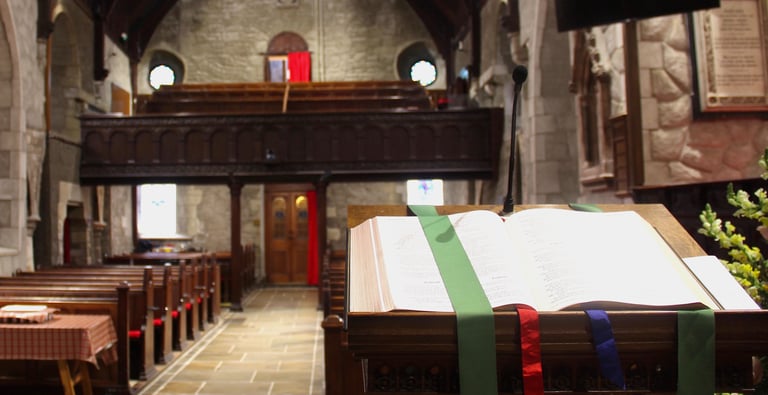
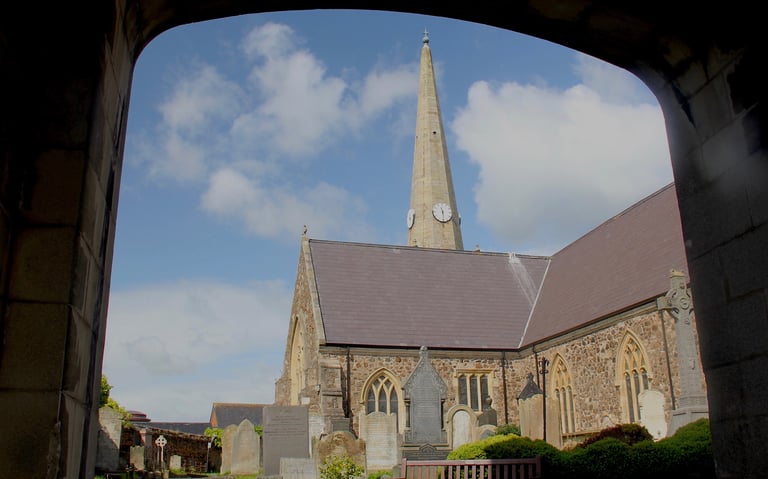
dominates the town today and in 1180 he commenced building of Saint
Nicholas' Church. In fact Carrickfergus Castle remained in continuous
military use for 750 years until it became the property of the Ministry
of Finance in 1928 and the church has been in continuous use as a place
of worship since then.
During that time both the
castle and the walled town which grew up around it have witnessed war
and bloodshed, siege and famine, treachery and murder as many of the
major figures of history, passed through.
King John, Hugh de Lacy,
Robert
the Bruce, William de Burgh all fought over it. Brian McPheliem O'Neill
burned much of the town on 2nd June 1573. Sir Francis Drake operated
out of the castle and harbour slaughtering 600 Scots on Rathlin Island
in 1575. In retaliation Sorley Boy MacDonnell attached and ravaged the
town.
The town wall
was ordered and partially
completed in 1579. In the same year the Governor of the town, Sir John
Chichester was shot through the head near Ballycarry in a dispute with
MacDonnell of the Glens over cattle rustling. Conn O'Neill escaped from
the dungeon in the castle in 1603 by means of ropes concealed in a
cheese sent to him by his wife!
By 1615 Sir Arthur
Chichester,
the new Governor, had completed the town wall, parts of which still
stand today. The Plantation of Antrim and Down and the rest of Ulster
began in this period and Presbyterianism became established. The Rev
John Hubbard arrived in 1621 with a small congregation from Southwark
in London, fleeing persecution. This became the foundation of North
Street Presbyterian Church. With the succession of Charles 1st to the
throne of England and his attempt to impose High Church conformity on
all Protestants, a new period of conflict in Carrick was set in motion.
The English Civil war began
in
1642 and as a result of the flow of events, the Scottish soldiers and
civilians here were seen as a threat to the Parliamentarians.
Eventually Oliver Cromwell arrived on Irish soil in 1649 and laid siege
to Carrickfergus on 2nd November. The Royalists surrendered and were
allowed to march out of the town on 13th December the same year.
As a result of fears fed by
rumours of a "papish plot" all members of the Roman Catholic faith were
required to move outside the walls of all the cities and fortified
centres in Ireland. From this grew the area in the west of the town
known as the "Irish Quarter".
On the
14th June
1690 King William of Orange stepped ashore at Carrickfergus and set off
through the town, "where almost numberless crowds received him with
continued shouts of acclamation." and headed towards Belfast and the
Boyne, the scene of his famous battle.
On 31st March the last
witchcraft trial in Ireland took place at Carrickfergus. The eight
accused women were found guilty and sentenced , "To be imprisoned
twelve months, and to stand four time in the pillory in Carrickfergus."
By this period the castle
had
fallen into some disrepair and was used mainly for housing French
prisoners during Britain's Seven Year's War with France. In February
1760 French forces, numbering about 800, sailed into the town,
overwhelmed the garrison and managed to break through the gate of the
castle. They were repelled at bayonet point, but a breach in the castle
wall allowed the French to capture the castle and release their
prisoners. Before leaving they burnt the town. They were intercepted by
Royal Naval ships and sunk.
In 1778 The American
Privateer,
Paul Jones, in his ship Ranger engaged HMS Drake off Carrickfergus. The
Drake surrendered, victory going to the first ship to fly the Stars and
Stripes.
During the late eighteenth
century there was considerable support in the Carrickfergus area for
the United Irishmen, many Presbyterian ministers joining their ranks.
William Orr, the United Irishman was tried in 1797 and subsequently
hanged. Such are the convolutions of Irish politics that the first
Orange Procession in the town took place on 12th July 1823.
The town continued to expand
during the nineteenth century, loyalty to the Crown being reflected in
the naming of the new streets being built. Queen St., Unity St.,
Victoria St. and Albert Road were all build during this period. The
railway line to Whitehouse opened in 1846 and to Larne in 1862. The
town's own gas works opened in 1855 followed by street lighting. 1896
saw the demolition of the town gaol.
During the 20th Century the
town saw a new level of prosperity with numerous industries moving into
the town. The Marine Highway was built in the 1960's.
The parents of President
Andrew
Jackson, were born in a small thatched cottage at Bonybefore on the
outskirts of the town.
Dean Swift, the author of
"Gulliver's Travels", lived at Kilroot, a couple of miles outside the
town and during his ministry there wrote his, "Tale of a Tub."

[ Back to top
]